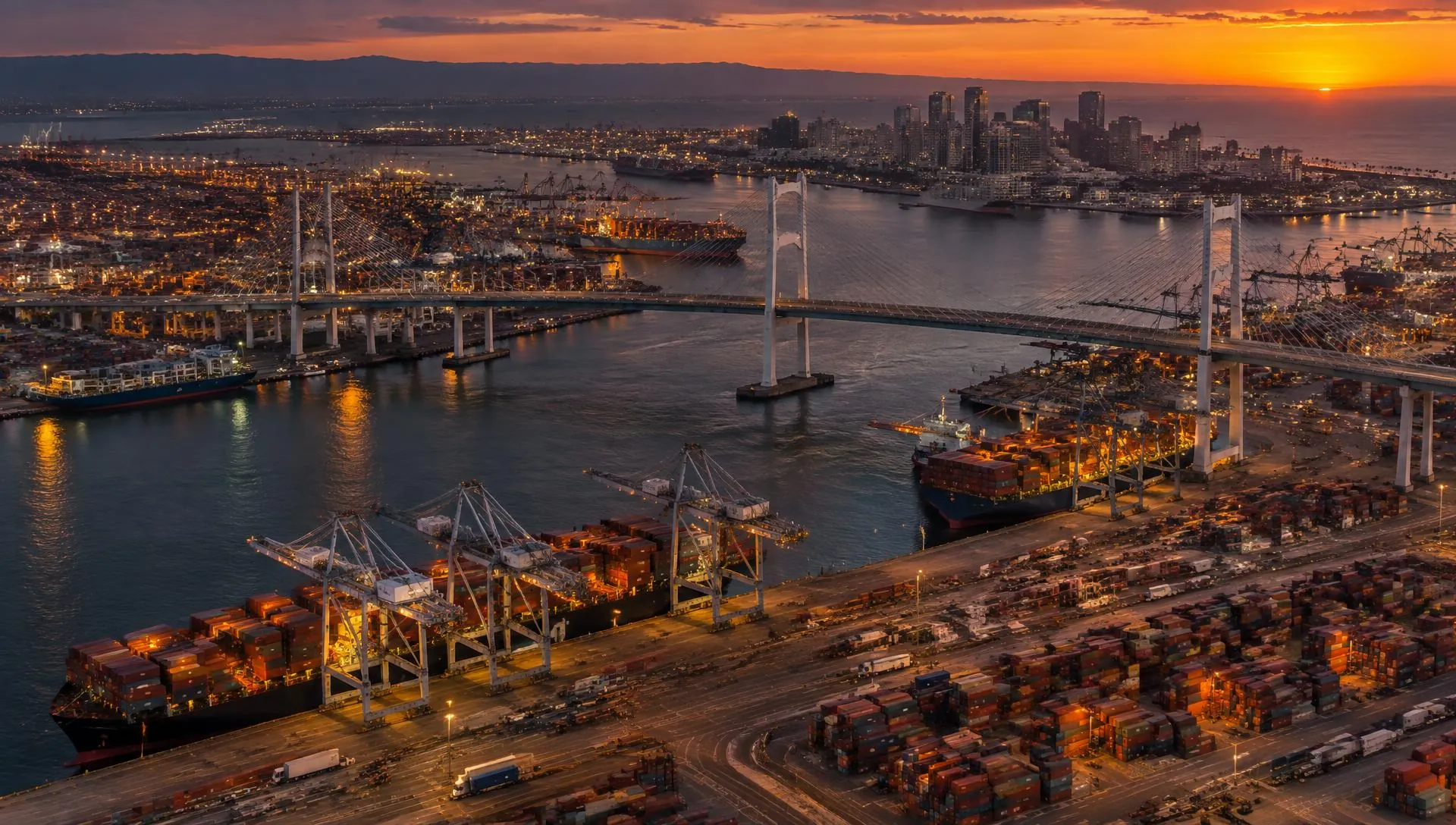

Port of Long Beach logistics, Southern California markets and nationwide trucking.
Get a quoteApparel and Textile Imports – Port Drayage
For an importer moving apparel or textiles through Los Angeles or Long Beach, forced-labor enforcement is the rule that sets this commodity apart.
DHS names apparel and cotton products among its high-priority sectors, and CBP enforces a rebuttable presumption against goods tied to the Xinjiang region. After CBP releases the container, the drayage leg can run to a CFS or a transload.
For a shipper, the practical point is timing. The drayage leg starts only when the container is free to leave the terminal. A container of apparel that CBP detains under the forced-labor law stays where it is while CBP reviews it, and a truck appointment made before release can go unused. Knowing which rule governs the box comes before planning the pickup.
Why Apparel and Cotton Draw Extra Scrutiny
DHS's 2025 Updates to the UFLPA Strategy, dated August 19, 2025, names the sectors the Forced Labor Enforcement Task Force treats as high-priority for enforcement: aluminum, apparel, cotton and cotton products, polyvinyl chloride, seafood, silica-based products (including polysilicon), and tomatoes and downstream products. The same update says the Task Force is adding caustic soda, copper, jujubes, lithium, and steel.
Apparel and cotton are not recent additions. DHS's update says both were identified as high-priority sectors in the initial strategy issued June 17, 2022. The Task Force says it identifies these sectors "to provide transparency to importers and send a signal to responsible businesses to prioritize scrutiny of supply chains that may involve products in those sectors."
Where apparel sits
DHS lists apparel, and cotton and cotton products, as separate entries in its high-priority sectors. The list describes higher-risk sectors. It does not state the outcome for any single shipment.
How CBP Enforces UFLPA
CBP's Uyghur Forced Labor Prevention Act page says CBP enforces the rebuttable presumption that goods mined, produced, or manufactured wholly or in part in the Xinjiang Uyghur Autonomous Region (XUAR), or by an entity on the UFLPA Entity List, are prohibited from U.S. importation under 19 U.S.C. § 1307. That statute provides that goods made wholly or in part in any foreign country by forced labor "shall not be entitled to entry at any of the ports of the United States."
In plain terms, "rebuttable" means the presumption is the starting point, not the final word: goods with a Xinjiang or Entity List connection are treated as prohibited unless the presumption is overcome. DHS's 2025 update also says Withhold Release Orders are not required for CBP to detain and exclude goods subject to the UFLPA, so a shipment can be detained without a prior order naming its producer.
CBP says it conducts applicability and exception reviews in the event goods are detained under the UFLPA. Put simply, these are the two ways CBP looks at a detained shipment: whether the presumption applies to the goods at all, and whether an exception to it is available.
CBP's page points importers to several resources for this stage:
- The UFLPA Attachment to the Notice of Detention, which gives example documentation importers may consider providing to CBP to prove their goods are not made in whole or in part with forced labor and to secure release.
- Applicability Review best practices, including guidance on executive summaries and sample tables of contents for Applicability Review submissions.
- Importer guidance released to help the trade community prepare for the rebuttable presumption.
- A UFLPA dashboard with statistics on shipments subjected to UFLPA reviews and enforcement actions.
For the drayage leg, the effect is straightforward: while a review is open, the container is not available for pickup. Questions about how these rules apply to a particular entry, and what documents to submit, are for the importer to confirm with its licensed customs broker.
After Release: CFS, Transloading and What Comes Next
Once CBP releases the container and the terminal lets it go, the cargo can move off the port to its next handling point. National Freight & Drayage runs transloading and LTL itself, and Container Freight Station (CFS) services and warehousing and storage are also part of its direct operations.
For an apparel importer, this means the box leaving the terminal and the work done on its cartons afterward can sit with the same operator. The site's U.S. import logistics overview sets out how drayage, CFS and transloading connect for containers through both ports. Port drayage at the Port of Los Angeles and the Port of Long Beach is part of the company's direct, asset-based Southern California port operations; the terminal pages for Port of Los Angeles drayage and Port of Long Beach drayage cover the pickup at each port, and the guide on importing through Los Angeles and Long Beach walks through each stage from arrival through holds to delivery.
Moving Released Apparel Containers From Los Angeles and Long Beach
Apparel and textile containers can wait on more than a vessel and a terminal appointment, and the pickup is planned around release. When a container is cleared to leave, National Freight & Drayage can handle the drayage leg and the CFS or transload work that follows. Requests can be sent through the freight quote form.
Request a drayage quoteFrequently asked questions
What does UFLPA mean for apparel importers at the Port of Los Angeles?
DHS names apparel among its high-priority sectors for forced-labor enforcement, and CBP enforces a rebuttable presumption against goods tied to the Xinjiang region or a listed entity. How the presumption bears on a particular entry is a question for the importer's licensed customs broker.
What is the UFLPA rebuttable presumption?
It is the presumption CBP enforces that goods mined, produced, or manufactured wholly or in part in the Xinjiang Uyghur Autonomous Region, or by an entity on the UFLPA Entity List, are prohibited from U.S. importation under the forced-labor statute. CBP conducts applicability and exception reviews when goods are detained under the UFLPA.
Are cotton and cotton products covered under UFLPA high-priority sectors?
Yes. The DHS 2025 update to the UFLPA Strategy lists cotton and cotton products as a high-priority sector, separately from apparel. DHS says both have been high-priority sectors since the initial strategy.
What happens to an apparel container after CBP releases it?
After release, the container can leave the terminal by drayage to its next stop, including a CFS or a transload. Container Freight Station services and transloading both sit within National Freight & Drayage's own operations.
Does a Withhold Release Order have to exist before CBP detains goods under UFLPA?
No. DHS's 2025 update says Withhold Release Orders are not required for CBP to detain and exclude goods subject to the UFLPA.