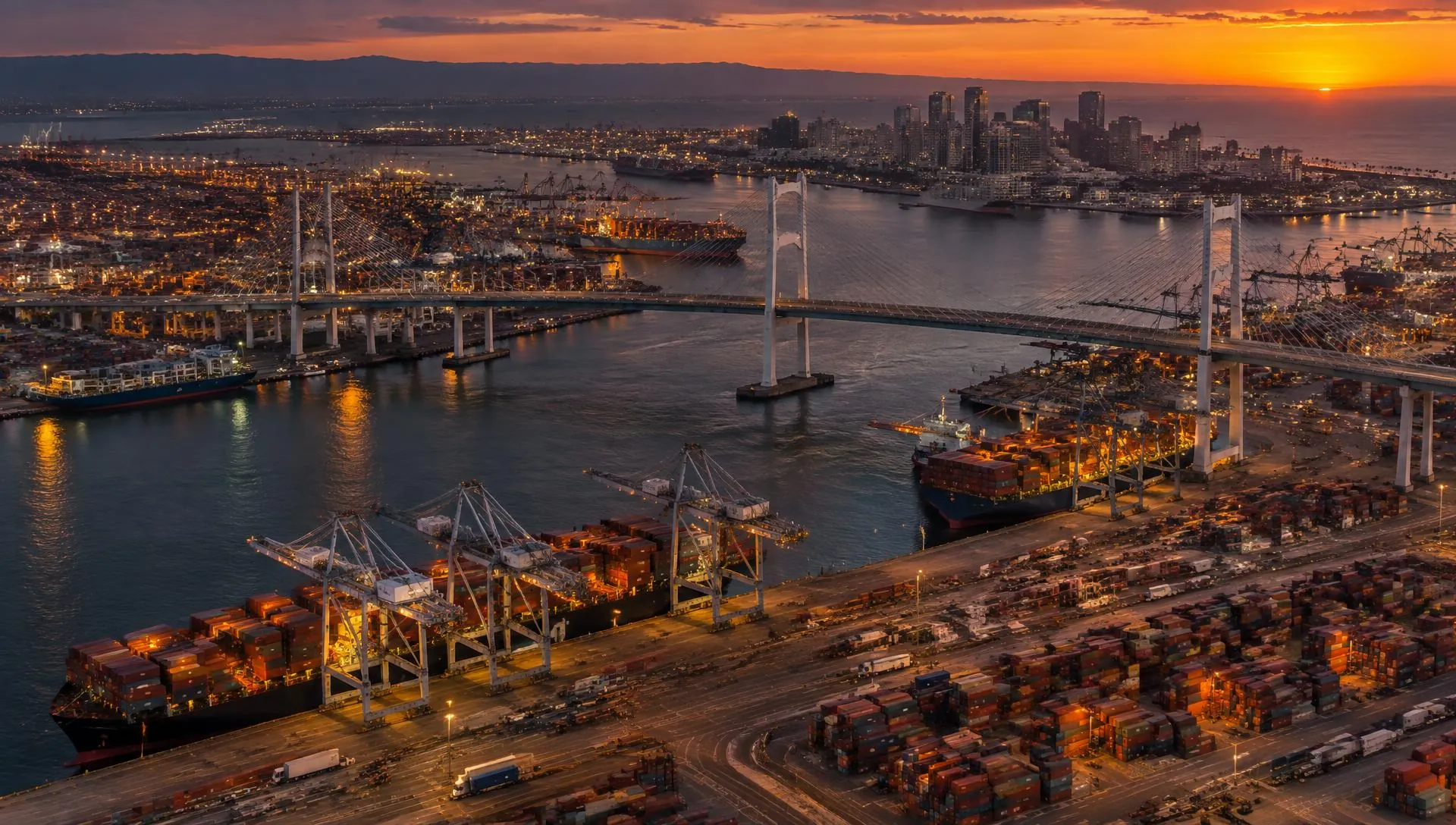

Port of Long Beach logistics, Southern California markets and nationwide trucking.
Get a quoteNational Freight & Drayage
Frequently Asked Questions
General questions
Why do receiver specifications change the work of unloading a container?
Receiver specifications add steps because each rule is met before the freight leaves the dock. Pallet type, maximum height, label placement and carton orientation rules all add handling to the unload. In a floor-loaded container every carton is handled by hand, so each added rule repeats across the whole load.
What are the first steps of moving an import container out of the terminal?
The first step is confirming the container is released, then booking a terminal appointment and supplying a chassis. The container is then delivered within the receiver's window, and the empty returns before the steamship line's free days run out. Each step has its own clock and its own charge if it slips. Equipment availability, weight restrictions, permits, and routing requirements should be confirmed for individual shipments.
What steps come between CBP authorizing an in-bond move and the truck leaving?
After CBP authorizes the movement, the terminal shows the container as releasable for in-bond pickup before it can leave. Line holds, freight charges and terminal fees are still cleared, and a pickup appointment is booked where the terminal requires one. Before leaving, the driver checks that the seal number on the container matches the in-bond record. The importer confirms the filings with its licensed customs broker.
How long does an import container take to reach its receiver?
It depends on several separate clocks rather than the drive itself. Customs and terminal release, the terminal appointment, the receiver's delivery window and the empty return each have their own timing. A pickup that slips moves every later step, and a cross-dock or delivery plan built around it has to be rebuilt. An exam, a rolled vessel or a closed dock changes the timing as well.
How long can an unentered import stay at the place it was unloaded?
Under 19 C.F.R. § 4.37, unentered merchandise may remain at the place of unlading until the 15th calendar day after landing. Under the same section, notice to CBP and a bonded warehouse is due by the 20th day so the goods can move to general order storage at the consignee's risk and expense. The importer confirms its entry timing with its licensed customs broker.
What can an importer expect when freight is transloaded near the port?
Freight most often moves from an ocean container into a 53' domestic dry van, and the container goes back to the steamship line within days. During the transfer, freight can be counted against the packing list, sorted by purchase order or destination, palletized, labeled and split across several outbound trucks. Equipment availability, weight restrictions, permits, and routing requirements should be confirmed for individual shipments.
Why does a floor-loaded container with many mixed SKUs take longer to unload?
Mixed SKUs slow an unload because cartons have to be read and separated by SKU as they come off the container. A container stacked by SKU from the nose to the doors lets a crew build pallets as it works, because each section is one SKU. The same cartons randomly mixed across many SKUs can easily double the labor and the floor space needed.
What is charged on a CFS invoice beyond the basic handling charge?
Storage after the free period, documentation or release fees and extra handling such as palletizing, wrapping or relabeling are billed on top of the handling charge. Most CFS tariffs also carry a minimum charge per house bill, so a very small shipment can cost more per cubic meter than a larger one. The handling charge itself is usually billed per W/M.